Most-loved dishes
AI summary of what 5 dish mentions say about the food
Reviewers rave about Lo Grand Baou’s boudin, calling it a must-try. The overall vibe is warm, rustic, and deeply satisfying.
“We have a series of boudin with different recipes from different areas of Valle d'Aosta. We start with the lower valley, with salampatate, made only with lard and potatoes and very little blood. Then the middle valley with classic boudin, exclusively blood, without beetroots. Then up the valley, with boudin and beetroot too. The difference is the quality of the beetroot and whether or not you add leeks and onions. I got obsessed with boudin. It's a typical Valle d'Aosta salami made mainly of potatoes, beets, pork meat and blood. It's the salami of the poor because the ingredients are almost all vegetable. It's almost a vegetarian salami, too bad there's a small part of pork bacon. The key ingredient is pig's blood. There are some towns where it's done without blood, they increase the percentage of beetroots. Beetroot gives color and, like blood, preserves. In this cured meat there is no preservative of any kind, except the natural nitrates of the beetroot. In Valle d'Aosta we have 74 municipalities, almost every town has its own boudin recipe. Blood cannot normally be used in Italy but here there is an exemption because boudin is a PAT. It's a recovery recipe, using all parts of the pig. Around Italy you don't find salamis made mostly of vegetables. When you have to let them ripen it's very difficult because they contain a lot of water. But once, since there was no availability of meat, people inserted potatoes and beetroot. This recipe comes from tradition. In Valle d'Aosta we have a dry climate and to age a cured meat with such a high percentage of water you must have this climate. Potatoes spread much later than in the rest of Europe because they didn't know how to treat them, so it's a traditional recipe but a recent one, from the nineteenth century.”
What creators say
1 creator has covered Lo Grand Baou. Most active: Cosa mangiamo oggi?
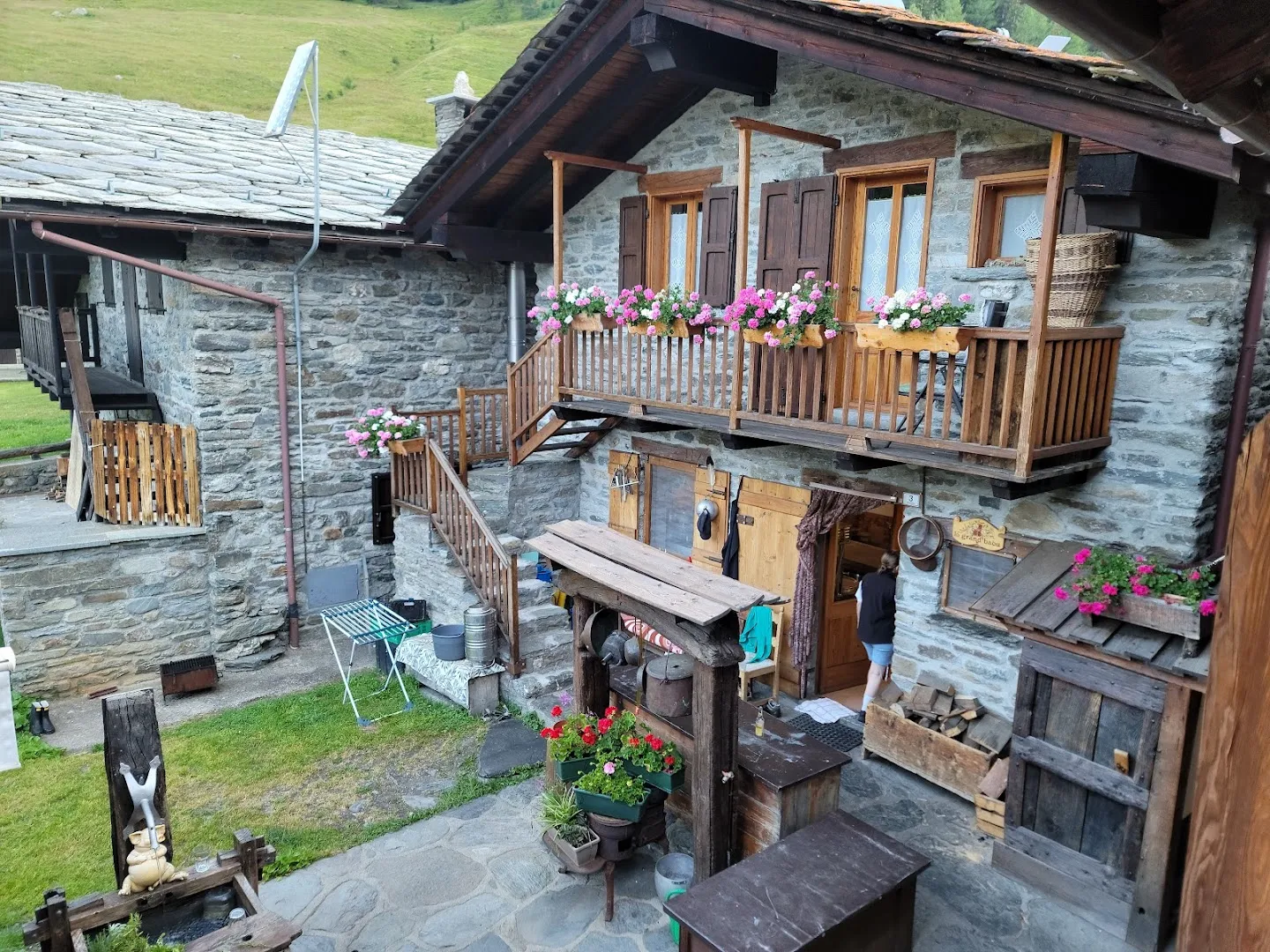
Lo Grand Baou is a fantastic place in Jovençan where we discovered traditional Aosta Valley dishes like boudin, polenta e brossa, and their signature polenta with Fontina and onions, all enjoyed in the sun with a beautiful view.
Dishes mentioned
Boudin
We have a series of boudin with different recipes from different areas of Valle d'Aosta. We start with the lower valley, with salampatate, made only with lard and potatoes and very little blood. Then the middle valley with classic boudin, exclusively blood, without beetroots. Then up the valley, with boudin and beetroot too. The difference is the quality of the beetroot and whether or not you add leeks and onions. I got obsessed with boudin. It's a typical Valle d'Aosta salami made mainly of potatoes, beets, pork meat and blood. It's the salami of the poor because the ingredients are almost all vegetable. It's almost a vegetarian salami, too bad there's a small part of pork bacon. The key ingredient is pig's blood. There are some towns where it's done without blood, they increase the percentage of beetroots. Beetroot gives color and, like blood, preserves. In this cured meat there is no preservative of any kind, except the natural nitrates of the beetroot. In Valle d'Aosta we have 74 municipalities, almost every town has its own boudin recipe. Blood cannot normally be used in Italy but here there is an exemption because boudin is a PAT. It's a recovery recipe, using all parts of the pig. Around Italy you don't find salamis made mostly of vegetables. When you have to let them ripen it's very difficult because they contain a lot of water. But once, since there was no availability of meat, people inserted potatoes and beetroot. This recipe comes from tradition. In Valle d'Aosta we have a dry climate and to age a cured meat with such a high percentage of water you must have this climate. Potatoes spread much later than in the rest of Europe because they didn't know how to treat them, so it's a traditional recipe but a recent one, from the nineteenth century.
Lo Boudin Frecachà
With the discard of the boudin, you make lo boudin frecachà. Frecachà means fried. This preparation is precisely with a view to not wasting stuff. You are doing a boudin, you have a piece left over, what do you do? You don't throw it away. This is a spreadable salami. What a scent of butter that has made the crust. You can taste the beetroot though… You can taste the spices and of course you can taste the pork. I know many of you will turn up your nose at the presence of blood. But actually, you don't perceive it inside the salami. It's really, really good. And the fact that the beetroot and potato are so present gives it a totally different texture than the regular salami you know.
Boudin con Mela Rennet
These are the boudin we made last night. We cooked them in the oven, with rennet apples. I could almost tell you that I made them, except that I'm not. You have to eat it with apple, with the hint of cinnamon that gives sweetness to the bite and instead the boudin is tasty. Very good.
Polenta e Brossa
The ancient corn polenta. Put the hot polenta in the bowl and add the brossa on top. Polenta e brossa was truly the food of shepherds. Boiling polenta. The brossa is the first surfacing of the ricotta from Fontina processing waste. It's like eating cream, guys. Look how super creamy it is. This is the first time I have associated a product of this type with polenta. Imagine hot polenta seasoned with this liquid which is actually very thick because it is in fact a cream. It is the surfacing of fats from Fontina waste whey. This dish has a bit of an ancestral flavor because this was the dish that was eaten many years ago by shepherds in the mountains. You have hot polenta, brossa, which is cold, and then you undoubtedly have to climb a mountain to burn off the calories.
Polenta del Grand Baou
This is the Grand Baou polenta, our forte. A fat and non-seasoned polenta, with Fontina cheese and onions au gratin. Wow! This was not part of the initial plans. It's the third time we've eaten it because we like it, guys. We, with the excuse and with the deception of the video on YouTube, ordered this one too. Hot polenta, melted Fontina cheese, roasted onions, in this location.